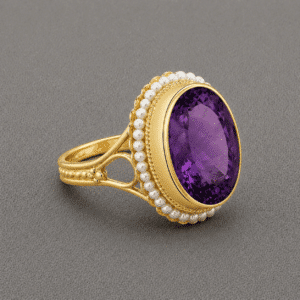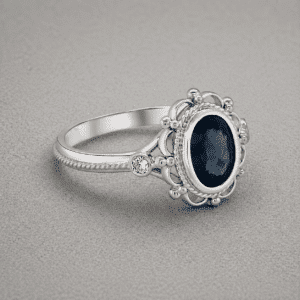
Victorian engagement rings represent one of the most detailed and meaningful eras in jewelry history. Defined by hand engraving, symbolic design, and intricate craftsmanship, these rings continue to influence modern vintage-inspired engagement rings—especially for buyers looking for something unique rather than mass-produced.
The Victorian era (1837–1901) produced designs that were personal, expressive, and structurally rich—qualities that still define high-end vintage-style rings today.
What Is a Victorian Engagement Ring?
A Victorian engagement ring can refer to either:
- An authentic antique ring from 1837–1901
- Or a modern ring inspired by Victorian design
In both cases, the defining feature is not the stone—it’s the design language:
- Detailed engraving
- Symbolic motifs
- Structured settings (cluster, bezel, halo-like forms)
- Warm gold tones
Victorian rings were never standardized. Each piece was unique, often created by hand with a strong emotional or symbolic intention.
Key Characteristics of Victorian Engagement Rings
Intricate Hand Engraving and Metalwork
Victorian rings are built around craftsmanship. Engraving, scrollwork, and texture are not decorative—they are structural to the design.
- Deep-cut engraving (not surface pattern)
- Milgrain edges and rope detailing
- Sculpted bezels and decorative frames
This level of detail creates depth and shadow, which modern minimal rings lack.
Gemstones Beyond Diamonds
Unlike modern trends, Victorian rings often featured a mix of stones:
- Sapphires, emeralds, garnets, pearls
- Diamonds in cluster or accent form
- Symbolic gemstone combinations
Early Victorian rings frequently used multi-stone clusters arranged like flowers, rather than a single dominant diamond.
Warm Gold Tones
Most Victorian rings were made in:
- Yellow gold
- Rose gold (often called “Russian gold”)
These metals defined the warm, antique appearance still associated with the era today.
Symbolism and Meaning
Victorian jewelry was deeply symbolic. Every design element had intention:
- Flowers → growth and love
- Hearts → devotion
- Birds → loyalty and peace
- Serpent (Queen Victoria’s ring) → eternal love
This symbolic approach is one of the main reasons these rings still resonate today.
The History of Victorian Engagement Rings
The Victorian era is typically divided into three phases—Romantic, Grand, and Aesthetic—each reflecting a shift in design, materials, and symbolism. This structure is well documented in gemological research and historical studies of Victorian jewelry (Victorian jewelry periods explained).
The era is typically divided into three phases:
Romantic Period (1837–1860)
- Nature-inspired designs
- Floral clusters and symbolic motifs
- Lightweight, expressive pieces
Grand Period (1860–1885)
- Heavier, more dramatic designs
- Darker gemstones
- Increased ornamentation
Aesthetic Period (1885–1901)
- More refined, balanced designs
- Increased use of diamonds
- Early transition toward modern styles
The discovery of diamonds in South Africa in the late 1800s made them more accessible, increasing their use in engagement rings.
Why Victorian Engagement Rings Are Popular Again
Modern buyers are moving away from standardized designs and toward individuality. Victorian rings align with that shift.
- Each design feels unique and non-replicable
- Strong focus on craftsmanship over size
- Clear connection to history and meaning
- Works well with both natural and lab-grown stones
There is also measurable growth in demand for vintage-style rings, driven by buyers seeking character and story over mass production.


Victorian-Inspired Engagement Rings by OroSpot
Modern Victorian-style rings combine historical design with current durability and precision.
Modern Victorian-style rings combine historical design with current durability and precision. At OroSpot, we create rings inspired by this era, focusing on hand engraving, antique structure, and balanced proportions rather than surface decoration.
Our designs draw from both early and late Victorian influences—ranging from ornate, gemstone-rich styles to more refined bezel-set compositions. Each ring reflects the core elements of the period: detailed metalwork, symbolic design, and a strong architectural feel.
These Victorian-inspired engagement rings are built to maintain the character of antique jewelry while offering the strength and precision expected in modern craftsmanship.
What to Look for in a Victorian-Style Ring
Not all “vintage-style” rings are equal. Most mass-produced options lack depth.
Focus on:
- True engraving depth (not stamped patterns)
- Balanced proportions (not oversized halos)
- Solid metal weight
- Intentional design structure, not decoration
A strong Victorian-style ring should feel engineered, not embellished.
Final Thoughts
Victorian engagement rings are not just decorative—they are structured around meaning, craftsmanship, and historical influence.
That is why they continue to perform both visually and commercially:
- They stand apart from modern minimal styles
- They emphasize artistry over trends
- They carry a sense of permanence and identity
For a brand like OroSpot, this is not just a category—it is your strongest positioning:
real craftsmanship, historical design, and non-generic jewelry.
OroSpot Victorian Rings
Find the Perfect Engagement Ring in Our Shop
-
 Engagement Rings
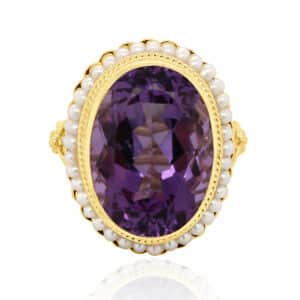
Victorian Amethyst Cocktail Ring
$2,799.00 – $3,499.00Price range: $2,799.00 through $3,499.00 -
Wedding Bands
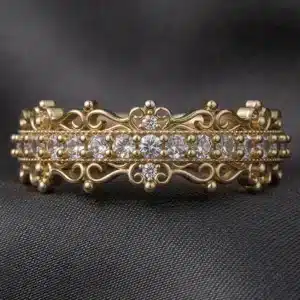
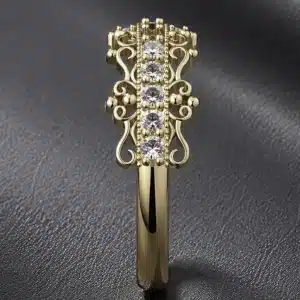
Victorian Scroll Diamond Wedding Ring
$1,199.00 – $1,399.00Price range: $1,199.00 through $1,399.00 -